The competition for the top budget-friendly running watch has seen a shift. For a long time, the choice was between the basic features of the Garmin Forerunner 55 and the unique appeal of the Coros Pace series.
However, in recent years, with the introduction of the Coros Pace 4 and the Garmin Forerunner 165, the landscape has changed. Both brands have incorporated vivid AMOLED displays into their entry-level models, giving them a more premium appearance.
While they may not be the most economical options available—older models can be found at lower prices—these two watches are the best choices in late 2025 (until either brand releases a new model) if you're looking for a modern, well-rounded device at the lowest possible cost.
At Wareable, we've conducted thorough reviews of both the Pace 4 and the Forerunner 165, using them through marathon training and everyday wear. Below, we outline the key differences to help you choose which one is right for you.
Price and competition
The Coros Pace 4 was released in November 2025, updating a beloved classic with a vibrant display, while maintaining its impressive battery life and lightweight design. Its retail price is slightly higher than the previous Coros Pace 3, at $249/£229. Despite this, it remains a competitive option with dual-frequency GPS and an AMOLED screen.
The Garmin Forerunner 165, on the other hand, was launched in March 2024. Initially priced at $249/£249 for the standard version and $299/£289 for the 'Music' edition, the device has since seen regular discounts, often bringing the price down to around $200-$250/£200-£250.
This price reduction means that the two watches frequently compete at similar price points, and the non-music version of the Forerunner 165 is often the more affordable option.
Design and display
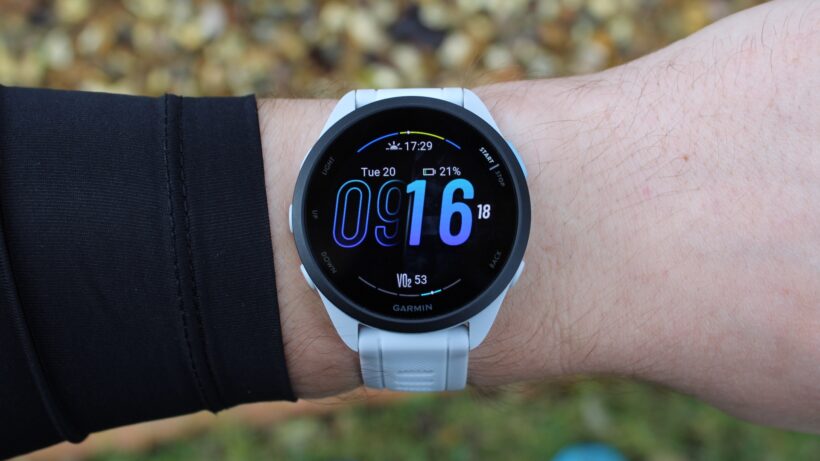
Both manufacturers have adopted a similar approach: prioritize lightness, comfort, and the use of plastic. Weighing around 40g each, these watches are housed in polymer cases. While they may not exude the luxury of a metal-bezeled Fenix or Apple Watch, they are unobtrusive on the wrist, ideal for long runs or sleep tracking.
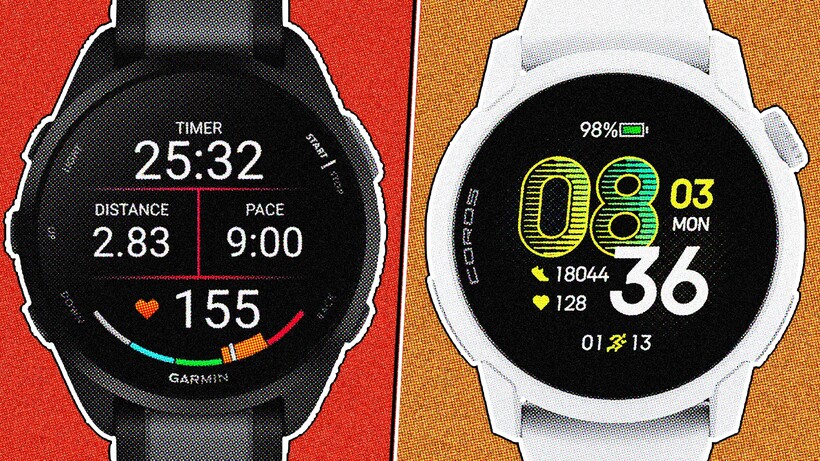
The displays are also very comparable. Both feature 1.2-inch AMOLED screens with a resolution of 390 x 390. In practice, we found them to be sharp and bright.
Garmin’s interface is typically more vibrant out of the box, while Coros opts for a more subdued brightness setting to conserve battery. You can manually increase the brightness on the Pace 4 to achieve the same level of vibrancy. Once adjusted, the displays are nearly identical and remain readable even in direct sunlight.
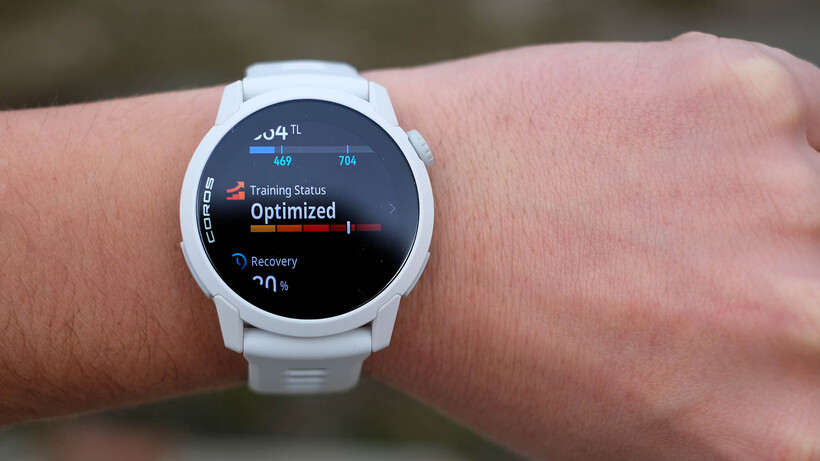
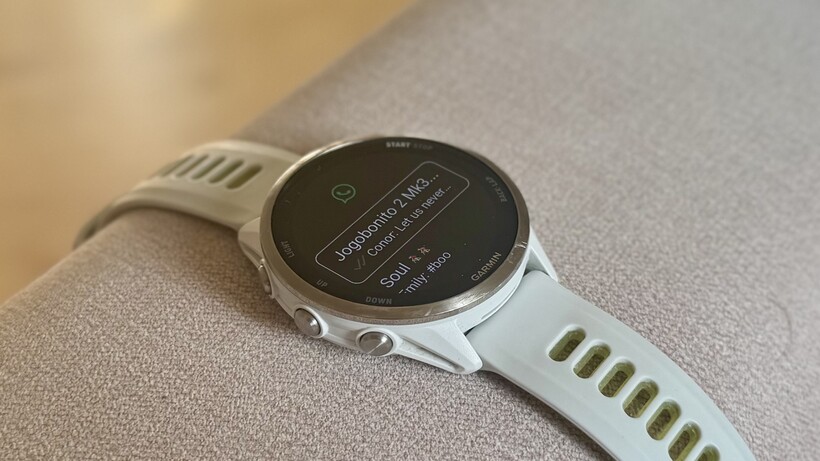
The primary physical distinction is in the control mechanisms. The 165 features Garmin's traditional five-button setup along with a touchscreen, which we believe sets the benchmark for sports watches. This design makes it easy to mark laps, pause, and navigate menus without obscuring the display.
Conversely, the Pace 4 uses a single digital crown (scroll wheel), a back button, and a touchscreen. While the crown is excellent for scrolling through data, buttons are more effective for starting and stopping runs, especially when your hands are sweaty or you're wearing gloves.
Sports tracking and accuracy
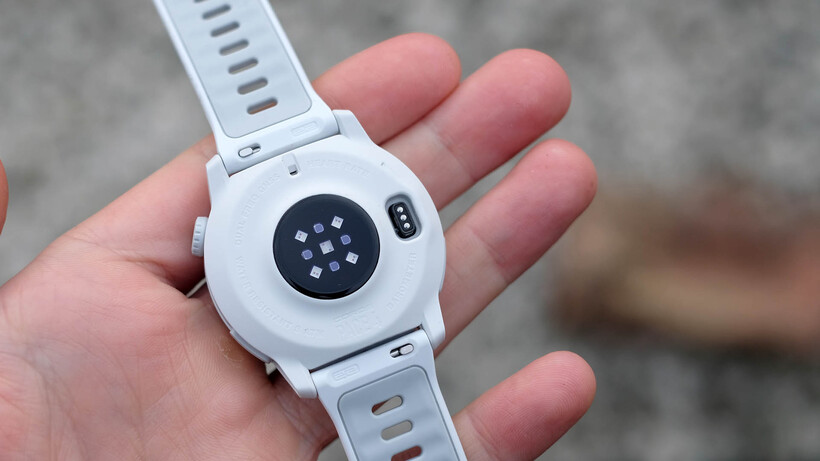
In terms of specifications, the Coros Pace 4 has an edge with its dual-frequency GPS, which allows it to connect with two satellite frequencies, potentially enhancing accuracy in areas with tall buildings or dense foliage. The 165, however, only offers single-band GPS.
Despite this, our practical tests indicate that the difference in performance is not as significant as the specs might suggest. Garmin’s single-band GPS is still highly dependable. In 95% of running situations—such as in suburban areas, open roads, and parks—the Forerunner 165’s tracking was nearly identical to that of the Pace 4.
You may only see the Coros’s advantage if you frequently run in urban canyons or on city streets with many tall buildings. Otherwise, the difference is minimal and not worth much concern.

Heart rate monitoring is another key factor. The Forerunner 165 employs Garmin’s Gen 4 sensor, which, while not as advanced as the Gen 5 sensor found in higher-end models, is still quite reliable for most beginners.
Our tests showed that it performed well during steady runs and intervals, closely matching the readings from a chest strap.
The Pace 4 also delivered solid results but occasionally struggled with high-intensity intervals and gym workouts, sometimes lagging behind sudden heart rate spikes. For consistent biometric accuracy, the Garmin is the better choice. However, we recommend using a chest strap for more precise readings, especially in specific conditions or weather.
Music, smart, and health features

This is where the two devices differ most significantly. If you prefer to run without your phone but still want to listen to music, the experience varies greatly.
The more expensive 'Music' version of the 165 operates like the top running watches with music capabilities. It supports offline syncing with Spotify, Amazon Music, and Deezer. With a premium subscription to these services, you can sync playlists and podcasts directly to the watch via Wi-Fi. The process is smooth, easy to update, and functions as expected from a modern device.
The Coros Pace 4 technically includes music functionality, but its implementation is outdated due to the lack of support for any streaming services. To add audio to the watch, you must own the MP3 files, connect the watch to a computer, and manually transfer them to the appropriate folder.
Given that the device only offers 4GB of storage, this method feels cumbersome and outdated in 2025. Unless you maintain a personal MP3 library, the music feature on the Pace 4 is largely impractical.
A limited package
In other areas, the smart features—if they can even be called that—are quite basic. The watch mirrors notifications when your phone is nearby and offers a few watch faces, but these capabilities fall short compared to a full-featured smartwatch like the Apple Watch.
This is also true for health-related features. You can get insights into some fundamental training metrics, such as heart rate variability and overall training load, along with sleep tracking. However, more advanced features like ECG, sleep apnea detection, and hypertension alerts are typically found on higher-end smartwatches or more expensive sports watches.
Battery life
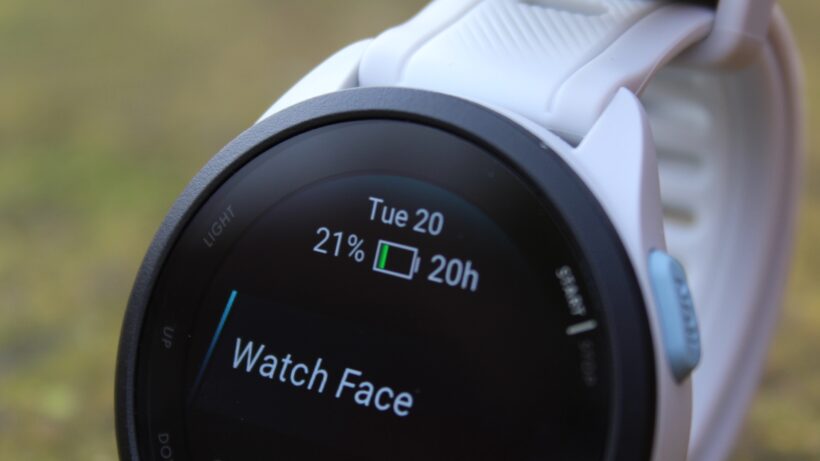
Despite the move to a power-intensive AMOLED screen, Coros has managed to maintain its reputation for exceptional battery efficiency. The brand has a history of maximizing battery life, and the Pace 4 continues this tradition.
Coros claims the Pace 4 can provide approximately 24 hours of continuous GPS tracking. In our tests, we found it outperformed the Garmin in daily mixed use. With the always-on display turned off and regular running, the Pace 4 can last around 6 days—and even longer if you disable the always-on display.
The Forerunner 165 is respectable and sufficient for most running activities, but it doesn't match the endurance of the Pace 4. It's rated for 19 hours of GPS tracking, and our testing confirmed this estimate.
In smartwatch mode with the always-on display active, the Forerunner 165 needs to be charged every 4 to 5 days, making it less efficient than the Coros. However, both watches are quite comparable in this regard, and actual battery life can vary based on usage.
Verdict: Which should you choose?
These two watch generations are very evenly matched—especially when comparing the Coros Pace 4 to the standard 165.
However, the Forerunner 165 Music is the more refined and polished option. Its robust offline music support, user interface, coaching features, and reliable heart rate monitoring make it a better choice for new runners. That said, it is also the priciest option here.
While the Pace 4 lacks some of the polish and ecosystem integration of the Garmin, it excels in raw specifications. If dual-frequency GPS accuracy and infrequent charging are priorities, it offers excellent value. It's particularly suitable for urban runners who don't need music or other advanced features. If there are no deals on the 165, the Pace 4 is also the most affordable choice.
Discover the best entry-level running watch in our comparison: Garmin Forerunner 165 vs. Coros Pace 4, available on Wareable.